
by Sean M. Cross, CAPT, USCG (retired) and LCDR Daniel Blaich, USCG
“Because of your superior performance of duty, it has been possible to commence helicopter operations aboard these ships with service wide standardization and greater safety.” – RADM William W. Childressi
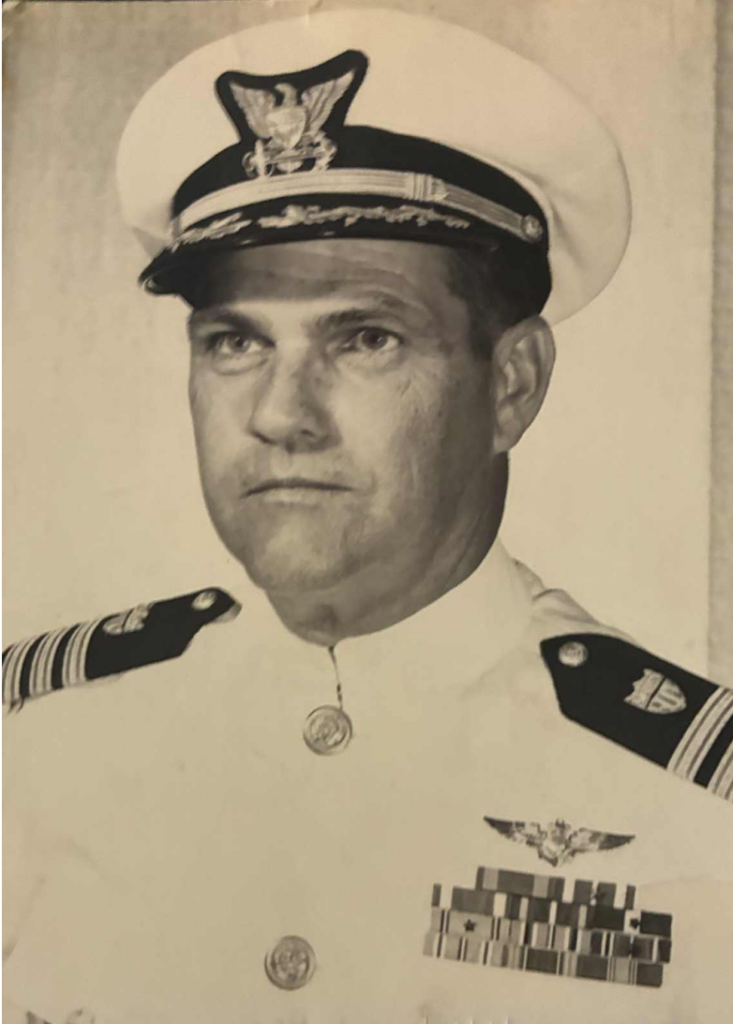
The modern operational landscape of the U.S. Coast Guard is inextricably linked to the integration of ship-helicopter operations. The U.S. Coast Guard played a key role identifying and adapting this new concept for everything from lifesaving and drug interdiction to mass migration response and fisheries enforcement. The symbiotic relationship between cutter and helicopter has become an indispensable asset, extending the reach and effectiveness of the service across its multifaceted mission set. While the seeds of this concept were sown in the early days of Coast Guard Aviation, it was the vision, dedication, and pioneering efforts of Commander John C. Redfield in the early 1960s that transformed a nascent idea into a standardized, safe, and highly effective operational capability.
LCDR Redfield played a pivotal role in the successful integration of helicopter operations into the Coast Guard’s cutter fleet. His work on the lead-ship of the RELIANCE-class of 210-foot Medium Endurance Cutters (WMEC) was instrumental in proving the viability and significant operational advantages of the ship/helicopter concept. The Coast Guard was ahead of the Navy in this regard, while the Coast Guard and Navy compared notes, LCDR Redfield was innovating a new concept without an existing model to replicate. The first U.S. Navy “small boy” (frigate/destroyer) designed with a helicopter flight deck and a dedicated hangar was the Knox-class, which was not commissioned until 1969.
In 1964, the Coast Guard Commandant, Admiral Edwin J. Roland, recognizing the importance of this new cutter program, directed that a well-qualified aviator experienced in open sea shipboard helicopter operations be assigned to assist the RELIANCE Commanding Officer, CDR Frank Fisher, in developing a helicopter operations capability.ii The Headquarters Office of Aviation (OAU) knew that if the RELIANCE was not able to safely operate with the HH-52A helicopter, the remaining WMEC cutters would be built without the flight deck. LCDR Redfield was chosen for this task due to his experience in open sea shipboard helicopter operations aboard cutters COBB, STORIS, NORTHWIND and EASTWINDiii.
As testament to the project’s high stakes, “CDR Frank L. Shelley, at headquarters, emphatically implored LCDR John Redfield, in charge of the evaluation, ‘Don’t prang one!’ A crash on the ship during the test would end the project and the promise of a ship/helicopter scheme. Redfield was convinced all future ships would be built without helicopter landing decks if anything bad happened.” iv
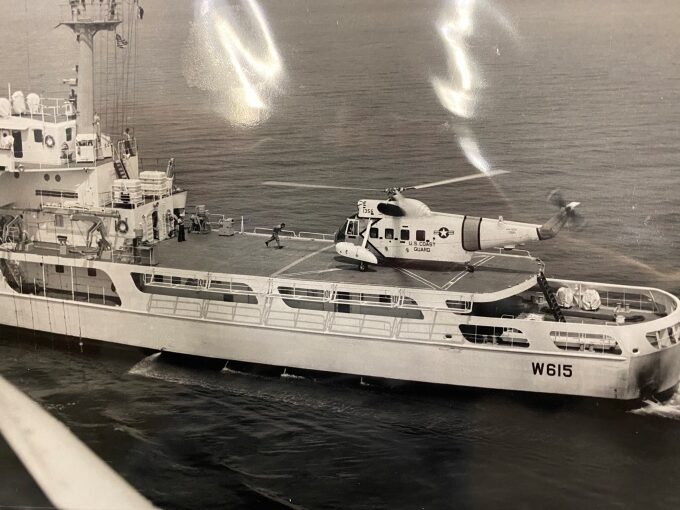
Redfield immediately took charge, meeting with CDR Fisher for the first time on 15 May 1964 to coordinate the upcoming test and evaluation program. He also gained access to Petroleum Helicopters’ (PHI) support facilities in Galveston, TX. PHI pioneered offshore helicopter operations by building the first offshore refueling facilities in the 1950s to support offshore oil and gas platforms in the Gulf of Mexico – Redfield borrowed several of their innovations to improve cutter operations. He also secured the assistance of LT William Russell (Air Station Houston), who helped train the RELIANCE crew in proper procedures and fire-fighting techniques. Redfield and his team overcame various challenges, including delays due to vessel machinery problems and the crew’s inexperience with ship-helicopter operations.
Despite the challenges, beginning with the first landing on 6 July 1964, Redfield successfully executed a series of sea trials off the coast of Galveston and Louisiana. He, along with LT Russell and Sikorsky pilot Bob Keim, conducted numerous landings, including night landings, to assess the feasibility and safety of shipboard helicopter operations. The test results were overwhelmingly positive. Redfield then oversaw tests with pilots from Air Station New Orleans to get their feedback on the operations bill for helicopter recovery. Later, the RELIANCE was tested in rough water conditions. Five aviators, including CDR Frank Shelly who had done the development and acceptance flights for the HH-52A, tested the helicopter in different sea and wind conditions. As a result of these successful trials and evaluations, LCDR Redfield determined that the RELIANCE possessed the desired characteristics for helicopter operations and could work under challenging sea conditions.
Redfield made several recommendations to address the unique requirements of operating a helicopter from a cutter. For the ship this included the need for more robust flight deck markings, abrasive deck paint, a ‘grid chock’ system to stabilize the helicopter, additional lighting for both the flight deck and the full ship, recessed tie-down fittings and improvements to tie-down equipment, and rubber fuel cells for emergency fuel situations. He also recommended airframe improvements such as improved placement of tie-down attachments, ribbed tires, and rear view mirrors.v Furthermore, he recommended initial sea state, wind, pitch and roll limits for safe helicopter operations in addition to pilot qualification and proficiency training requirements. Finally, Redfield recommended an amendment to the Air Operations Manual (CG-333) covering shipboard helicopter operations – this eventually turned into Shipboard Helicopter Operational Procedures Manual (originally CG-419 and later COMDTINST M3710.2)vii.
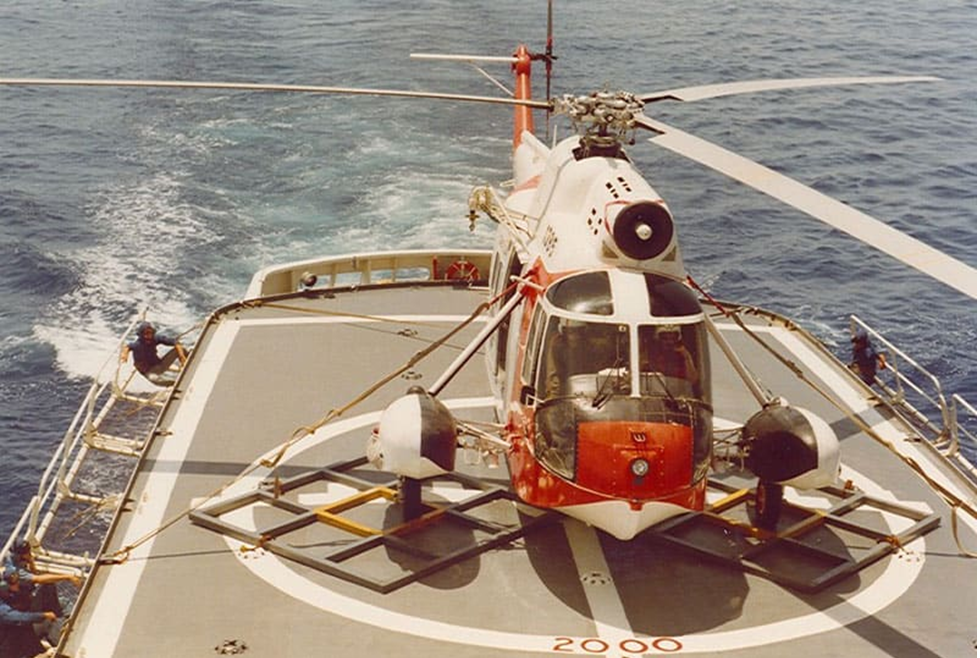
Redfield’s work on the RELIANCE had a profound impact on the Coast Guard’s operational capabilities. The remaining 210-foot WMEC cutters and subsequent HAMILTON-class vessels were designed with helicopter facilities, enabling the Coast Guard to significantly expand its search and rescue, law enforcement, and other mission capabilities. This accomplishment, however, was only part of the story. Redfield’s work paved the way for the modern Coast Guard, particularly during the 1980s and 1990s. The ship/helicopter combination became indispensable in the Coast Guard’s later efforts to fight drug trafficking with the Helicopter Interdiction Tactical Squadron (HITRON), handle mass migration events such as the Mariel Boat Lift and Operation ABLE VIGIL (1994) and enforce fisheries regulations in support of Alaska Patrol (ALPAT).
Sixteen RELIANCE-class cutters were built and a majority served for 50-plus years – some have reached 60 years – likely the longest serving full class of ships in Coast Guard history and probably the most numerous class of major cutters. Additionally, Redfield’s successful trial was a major turning point, transitioning ship-helicopter operations from a niche icebreaker function to a fundamental operating concept on all subsequent major cutters. It also marked the genesis of a new qualification for nearly all helicopter units, as they began routinely supporting cutter deployments, until the advent of special missions changed the balance.
While CDR Redfield’s most enduring and impactful contributions to Coast Guard Aviation were his ship-helicopter integrations efforts, his life and service included other key achievements that extended far beyond these groundbreaking trials.
John Redfield was born July 6, 1917, in Chicago, IL to Ileen Moore and James Sanborn Redfield (adoptive parents, Margarite and Eric Knoblochviii).ix He graduated from Sullivan High School in Glenwood in June 1936x. His flight school application states “received aviation mechanic training at Lane Technical High School (two years)…Later on I attended various flying schools and received training in actual control of aircraft and have at the present time approximately fifty (50) flying hours, thirty (30) of which are in solo status.”xi
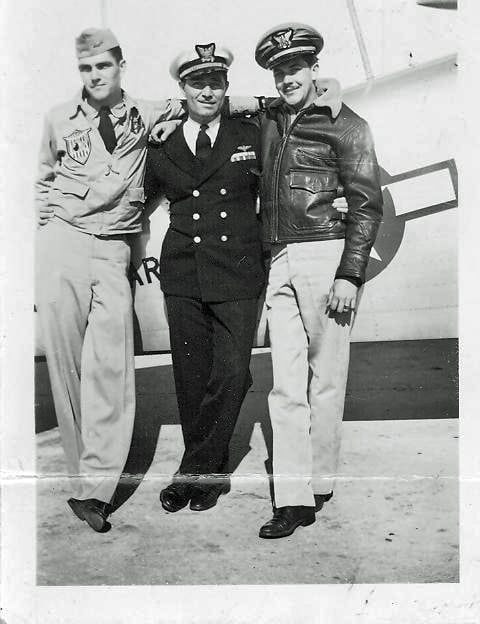
John enlisted in the Coast Guard on 02 October 1941 (66 days before the Pearl Harbor attack) at age 24 in Algiers, LA and served as a non-rate assigned to Life Boat Stations Manistee, MI and Chicago, IL quickly rising thru the ranks to Machinist Mate (MM) 2c in eight months aboard USCGC HOLLYHOCK – a 175-foot buoy tender in Milwaukee, WI.xii On 16 July 1942, he arrived at Naval Reserve Aviation Base New Orleans, LA (New Orleans Lakefront Airport) for 13 weeks of “preliminary flight training”. Upon completion, he reported to Naval Air Station Pensacola, FL for “intermediate flight training”. He was designated an Aviation Pilot (AP) on 14 April 1943 and advanced to AP1c with an assignment to Air Station Brooklyn, NY arriving in May 1943.
At Air Station Brooklyn, Redfield flew a diverse range of aircraft (J4F-1, PH-3, JRF-3, SO3C-1, J2F-5, SNV, and the OS2U-3) for anti-submarine, harbor, and convoy patrol missions. He also attended instrument training in Houston, TX in January 1943, where he flew the R30-1.xiii Redfield’s journey into the world of rotary-wing aviation began on 22 June 1944, when he completed helicopter training, becoming Coast Guard Helicopter Pilot #15. His training was under the tutelage of AP1 David Gershowitz (Helicopter Pilot #7)xiv.
Following his helicopter training, Redfield transferred to Air Station St. Petersburg, FL, from July – December of 1944. This stint was followed by a deployment to VP-6 CG at Bluie West 1, Narsarssuak, Greenland, where he served from January to October 1945. The VP designation stood for heavier-than-air (V) and patrol (P), indicating a fixed-wing patrol squadron. As a VP-6 CG pilot, Redfield flew the PBY-5A Catalina and the PB4Y-1 Liberator, participating in vital search, reconnaissance, anti-submarine patrols and convoy coverage during the final months of World War II. On 15 April 1945, Redfield was promoted to Ensign and designated Coast Guard Aviator #471, marking his transition into the officer corps.
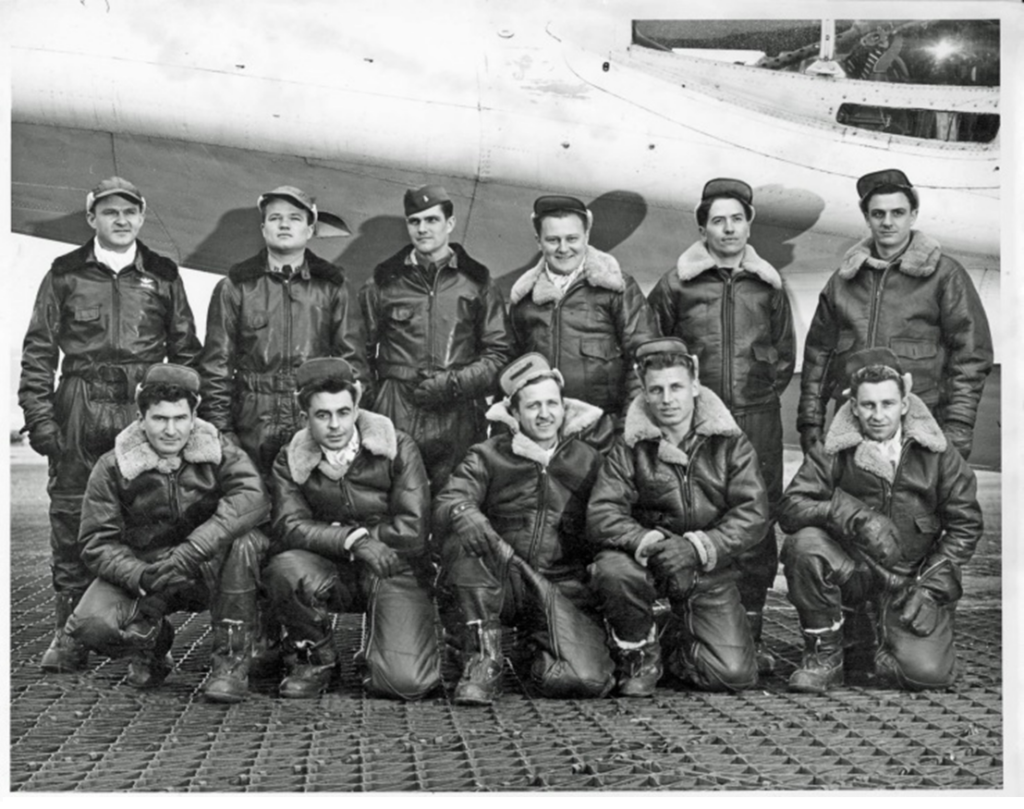
Operating in this region routinely required navigating thousands of miles over ice and open sea, often with minimal navigational assistance. Severe crosswinds posed a persistent danger, frequently exceeding 120 knots over the ice cap. At Bluie West 1, surface winds seldom dropped below 25 knots, and the sole runway had a considerable gradient sloping toward the Narssarssuak Fjord. Standard procedure dictated uphill landings and downhill takeoffs. During periods of inclement weather, ingress and egress required pilots to maneuver at low altitudes within the fjord itself, a challenging operation described as akin to “flying in a tunnel” due to the 4,000-foot mountains flanking both sides of the narrow passage.xv John Redfield said.
“Most of the time, our return to BW-1 during bad weather conditions was an exercise in nail-chewing. We had very few instrument landing aids. Sometimes when we were inbound with one-quarter to one-half mile visibility we would receive a report that another plane had just departed BW-1 on a priority mission! After radar was installed in the PBYs navigation up and down the fjord became easier and safer. At the last turn to the west, if we could not see BW-1, less than a mile away, we would pull up and climb out.xvi”
While serving with VP-6 (CG), Redfield earned recognition for a reconnaissance flight that he flew north of Eskimonaes (Bluie East-5), Greenland under very adverse conditions”.xvii This is potentially linked to his Air Medal, documented in his service record and observed in photographs – the service record entry reads: “VPB-6 (CG) 08/20/45 – awarded AIR MEDAL by CinCLANT in the name of President of the United States. Authorized Commandant letter CG-73 dated 12 July 1945xviii.” However, a specific citation for this mission is missing. A possible correlating mission from the VP-6 War Diary describes the USCGC STORIS escorting the USAT BELLE ISLE to various locations in Greenland (Reykjavik, Scoresby Sound, and Kangerd-Iugssuak on Mike’s Fjord) between July and August 1945, to resupply U.S. Army Weather Stations.
Returning to the states in October 1945, Redfield completed brief stints of flying duty at the Coast Guard Headquarters – Aviation (later Air Station Washington) flying R5O-5s for executive transport out of Washington National Airport and Air Station Traverse City. In May 1947, Redfield was assigned to Air Station Salem, MA where he flew the Martin PBM-5G Marlin, a hold-over from the war, the unit’s primary rescue aircraft.
On 12 June 1947, ENS John Redfield served as the co-pilot on a PBM-5G that undertook a daring medical evacuation mission. The crew, led by LTJG John “Jack” Weber, flew hundreds of miles through instrument weather to rescue a critically injured Norwegian seaman. Redfield played a vital role in the successful rendezvous with the USAT Willard Holbrock, facilitating the transfer of the injured sailor. The mission required a hazardous offshore landing and a challenging takeoff in rough seas. Redfield’s contributions to the flight contributed significantly to the safe extraction and transportation of the patient back to Salem, where he received urgent medical care. Due to his performance during this perilous rescue that saved the life of Knut Thorsoe, ENS Redfield earned the Distinguished Flying Cross – CITATION below:
“For heroism and extraordinary achievement in aerial flight as pilot of PBM-5G BUNO 84686 on 12 July 1947 you did plan and successfully carry out a rendezvous and offshore landing with the USAT Willard Holbrock at position 112°T 740 miles from Salem, Mass. You flew through instrument weather, made a hazardous offshore landing, transferred the patient, took off and returned to your base where the patient was transferred to a waiting ambulance. Your performance of duty was in keeping with the highest traditions of the Naval service and contributed materially to the saving of the life of the patient, Knute Thorsoe of Norway.”
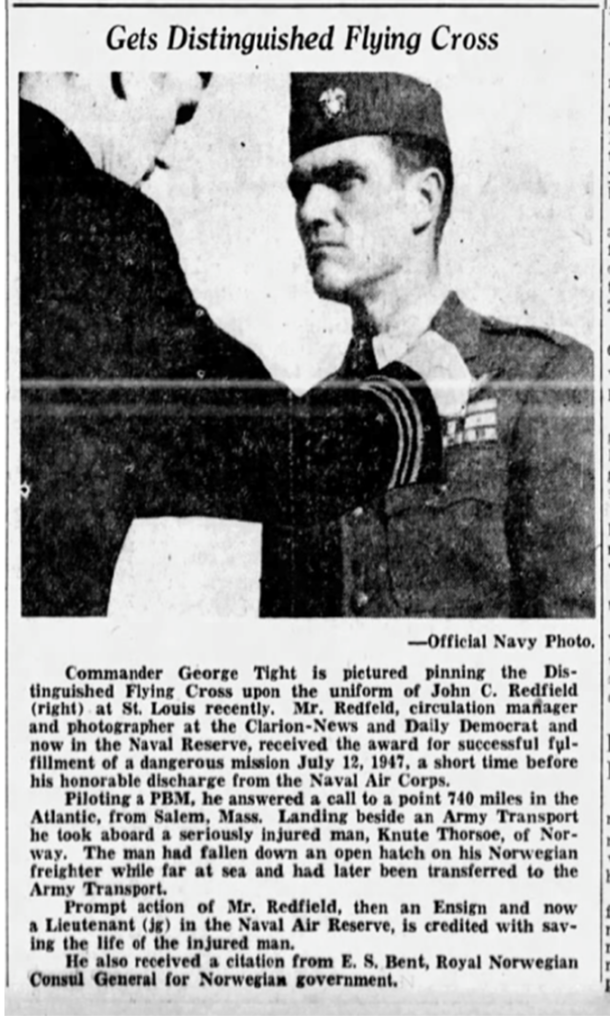
Redfield exited the Coast Guard in 1947 to focus on his family. He joined the staff at his wife’s family newspaper as the circulation manager. In addition, he flew commercially as both an airplane and helicopter pilot. Despite these jobs Redfield continued to pursue a military affiliation. Within months of his Coast Guard discharge, Redfield helped organize a Naval Reserve aviation unit in his Indiana town. Assisting him in this endeavor was his friend and fellow former Coast Guard pilot Peter Mattaliano. He briefly served as a Naval Reserve Aviator before regaining his Coast Guard commission as a reserve Ensign. As the Korean War escalated Redfield repeatedly pursued a recall to active duty, eventually succeeding.xix
After returning to the active duty Coast Guard in January 1952, Redfield was assigned to several units – Air Station Elizabeth City, NC (January 1952); Air Station Barbers Point, HI (June 1952) and Air Station Biloxi, MS (February 1954). Interestingly, in 1952, during the Korean War, the Coast Guard established an air search and rescue detachment at Wake Island to provide support for the increased trans-Pacific military and commercial air traffic. Redfield deployed here from Air Station Barbers Point for six months flying the P4Y-2G Privateer aircraft and worked in coordination with Coast Guard Ocean Station cutters to provide weather data and search and rescue coverage across the Pacific. The primary missions included escorting distressed aircraft with engine failures and dropping survival equipment, ensuring the safety of vital personnel and supplies traveling between the United States and the Far Eastxx.
Redfield arrived at Air Detachment Annette, AK in August 1956 and flew the new Grumman UF-1G Albatross. Redfield was recognized by the Royal Canadian Navy for a flight on 17 November 1956 to deliver 60 million units of penicillin from Prince Rupert to Queen Charlotte City for treatment of a Royal Canadian Navy spouse at Massett with an acute attack of peritonitis (infection of the thin membrane lining the inside of the abdomen and covering most abdominal organs). Due to the adverse weather conditions no private or charter planes were available. Redfield and his crew carried out the 500 miles roundtrip under instrument flight conditions and the patient made a full recovery that was credited to the timely delivery of medicine.xxi
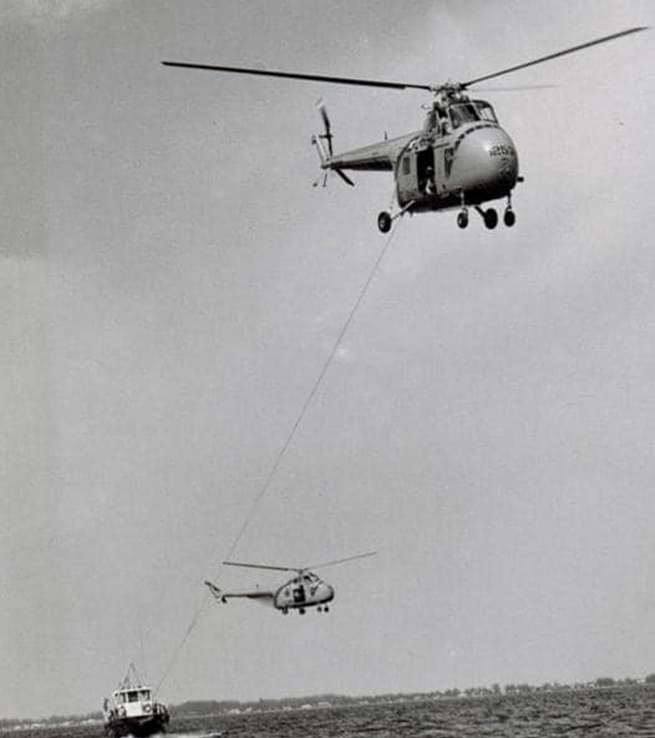
Since Annette was an unaccompanied tour, Redfield spent only one year there before orders brought him to Air Station St. Petersburg FL in September 1957. About this time, the unit was conducting experiments to test the feasibility of using helicopters for towing disabled vessels out of danger. The program, called Project TUGBIRD, involved towing various craft, including a large buoy tender, with a 1/4-inch steel cable attached to the helicopter’s lower rear fuselage, and demonstrated that helicopters could tow vessels to safety and lay towlines to cutters or patrol boats. Redfield jumped right in and conducted many early helicopter towing tests for the Coast Guard with the Sikorsky HO4S-3G during the fall of 1957xxii. The experimental test program was successful and led to Sikorsky HO4S and HH-52A helicopters being equipped for towing duties.
The innovative capability was used during two high visibility cases between 1958 – 1968 – and maybe others:
11 May 1963: an HO4S (later H-19G) #1309 assigned to Air Station San Francisco, CA and crewed by LCDR Warren S. Petterson (AC); none – single pilot (CP) and AE1 Roger Lake (FM) launched in response to the disabled 36-foot F/V PIRATE II being blown down on Seal Rocks. Petterson earned an Air Medal.
07 June 1966 (the newspaper article says 07 JUNE, the OFFICIAL Coast Guard Chronology says 11 JUNE): an HH-52A #unknown assigned to Air Station Kodiak, AK and crewed by LT (maybe LCDR) Paul H. Breed (AC); unknown (CP) and unknown (FM) launched in response to the 40-foot fishing vessel adrift two miles off Cape Kubugakli in 45 knot winds.
Art Wagner stated “I had the good fortune to be instructed with tugbird HO4S and H-52 by those involved in the development. John Redfield and Al Flanagan come to mind as well as Joe Ferhenbacher who was an engineer at the Aircraft Repair & Supply Base when the design was put together.”xxiii The Navy still uses the procedures developed by the Coast Guard for towing paravanes with helicopters to remove mines.
Interestingly, on 26 September 1960, Redfield was involved in one of two HUS-1G helicopter mishaps within an hour of each other while in a hover during an attempted SAR pickup of victims of a U.S. Air Force B-47E bomber that crashed shortly after takeoff from MacDill AFB. The cause was not determined.xxiv The Coast Guard had not been satisfied with the HUS-1G and as a result of the Tampa Bay incidents the Coast Guard decided that they were not going to purchase additional HUS-1G helicopters – this eventually led to acquisition of the Sikorsky HH-52A.
Selected for O-4, Redfield transferred to Air Detachment Kodiak, AK in August 1961 and pinned on gold oak leaves on 01 December 1961. Redfield’s time in Kodiak was marked by three significant professional events – the long range medical evacuation of a Soviet sailor under challenging conditions, a helicopter deployment aboard USCGC NORTHWIND and attendance at the University of Southern California Aviation Safety School.
On 24 March 1962, a Grumman UF-2G (later HU-16E) #1279 assigned to Air Detachment Kodiak, AK and crewed by LCDR John C. Redfield (AC); LT William B. Clabor (CP); AL1 Jon D. Main; AT2, Salvatore J. Gaffney; AD2-P1 Charles H. Coker; AD3-P1 Philip R. Thompson; LT P. E. Slightham MC, USNR; and HM1 Oran B. Sage, USN risked their lives in hazardous low-level flight through the Aleutian Islands to rescue a Soviet seaman, Boris Kozin, from the Soviet motorship Bditelny, who become trapped between a small boat and a trawler. His chest was crushed and his skull fractured.xxv
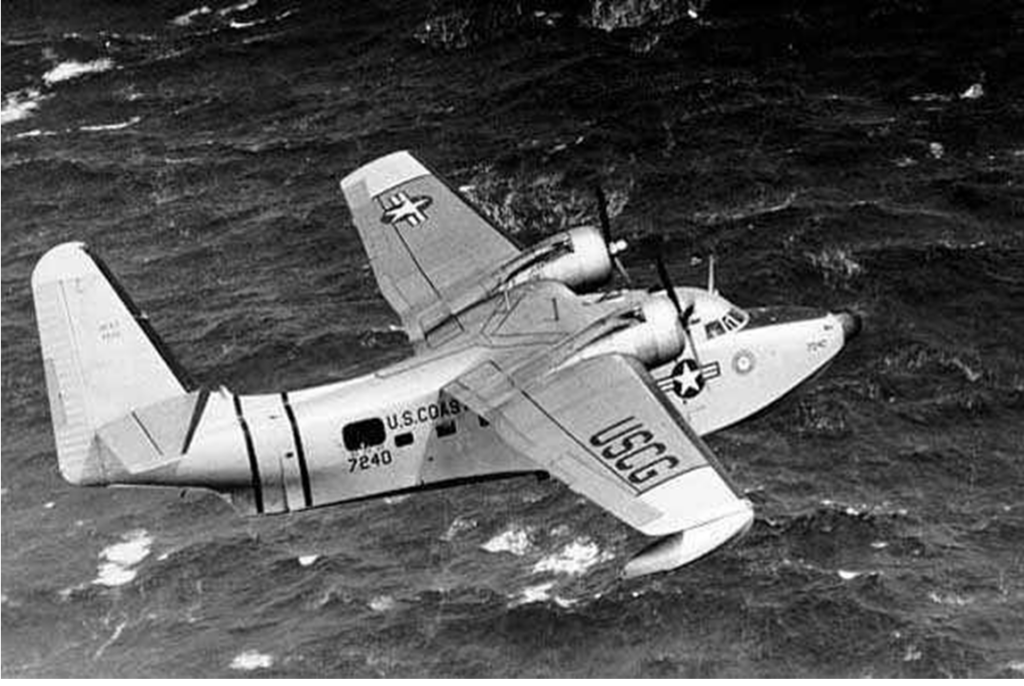
The plan was to rendezvous with the vessel at St. Paul, carrying a Navy doctor, LT Pierre Slightam, and a hospital corpsman. When the Bditelny arrived, the patient was taken to Station St. Paul Island for an emergency operation aided by Dr. Hugh Water of the U.S. Public Health Service, head of the Alaska native hospital. When the operation was completed, Slightam recommended immediate evacuation to Anchorage. The man’s injuries required that his body be kept as close to normal sea-level pressure as possible. Since no pressurized aircraft were quickly available the patient was loaded aboard the two-engine amphibian for an 800-mile night flight to Elmendorf Air Force Base with the plane flying at little more than wave-top altitude.xxvi
The successful completion of this mission resulted in expressions of appreciation from the Soviet Government, U.S. Department of State, Coast Guard Commandant and 17th District Commanderxxvii.
Redfield deployed aboard USCGC NORTHWIND from 27 July – 05 September 1962 with two Bell HTL-7 Sioux helicopters with floats (HUL #1337 and #1338) and another pilot. Departing from Kodiak, NORTHWIND broke ice in the Bering and Chukchi Seas as far north as Point Lay, AK north of the Arctic Circle boundary. Between them, the two pilots flew the ship’s medical personnel to 19 remote Yupik villages to administer medical and dental care to natives who otherwise might never see a physician. The pilots also carried out photographic and search missions, mail logistics, aids to navigation research, radar tracking exercises and gunnery evaluation. In a memorandum dated 13 September 1962, NORTHWIND commanding officer, CAPT Russell Waesche, Jr. described Redfield as follows:
“In furtherance of the native care program of the Bering Sea Patrol, 14 villages were visited. Major support was by helicopter since shallow water required that the ship anchor from five to nine miles offshore at most locations. In less than six weeks, LCDR Redfield flew 160 hours. He was always ready to go, never complained, never lost interest or his fine sense of perspective, even though the total number of hours flown is far above that of any other helicopter pilot on NORTHWIND during the past four years. LCDR Redfield is smart, alert, cool, and clear-thinking. He is excellent in military dress and courtesy, and he was always available for advice, lectures, and other help. He has a fine sense of humor and was a good shipmate He approached his pilot duties with professional care, good judgment, and foresight I consider him to be an excellent officer in every respect.”xxix
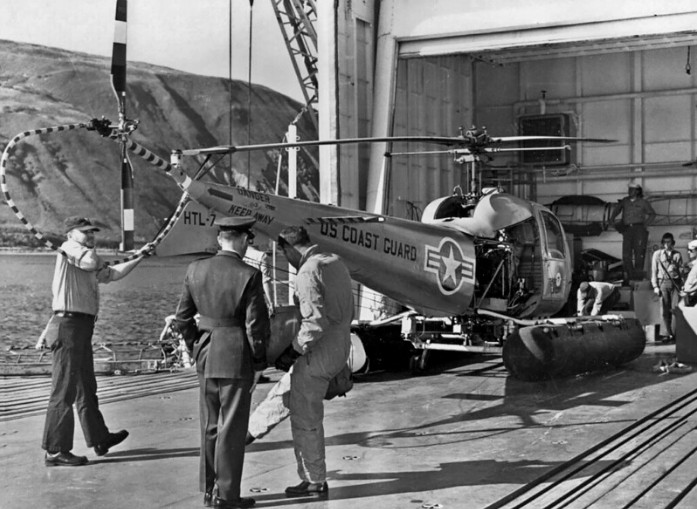
Foreshadowing his later work, Redfield’s after action report made numerous recommendations for improvements to facilities, procedures and aircraft compliment. His performance during this deployment and the accolades from CAPT Waesche likely helped propel him into the opportunity to lead the RELIANCE-class ship-helicopter operations evaluation. Waesche was assigned as the 8th District (New Orleans) Chief of Operations in July 1964 and later the Chief of Staff.
Later that year, from 03 October to 14 December 1962, Redfield attended the Army Aviation Safety Officer Course at the University of Southern California Aviation Safety School. His course of study included: Physiology, Electrical Engineering, Aeronautical Engineering, Psychology and Accident Prevention & Investigation – earning him 13 college credits.
After two years in Kodiak, Redfield was assigned as the Executive Officer (XO) at Air Detachment New Orleans, LA in August of 1963. Less than a year after arrival, he was selected to lead the RELIANCE-class ship-helicopter operations evaluation described earlier and he continued his heavy involvement in operational flying as the XO.
On 05 December 1964, an HH-52A #1357 assigned to Air Detachment New Orleans, LA and crewed by LCDR John C. Redfield (AC) and a crew risked their lives in hazardous low-level flight below 200 feet due to challenging weather including high winds, heavy seas, and poor visibility to rescue an ill seaman, Robert Wiggins of Pensacola, FL, from the fishing schooner, CARRY B. WELLS, 75 miles off the Louisiana coast.xxx
Three months later on 25 February 1965, an HH-52A assigned to Air Detachment New Orleans, LA and crewed by LCDR John C. Redfield (AC); LT Jack W Dunn (CP) and AM1 Clifford H. Maher (FM) saved three fishermen by hoisting them to their helicopter in rough weather from the fishing vessel MISS LIBERTY as she was sinking. LCDR Redfield earned a Coast Guard Commendation Medal – CITATION below.
Lieutenant Commander REDFIELD is cited for meritorious achievement in the performance of duty on 25 February 1965 while serving as pilot of a Coast Guard helicopter engaged in the rescue of three men prior to the sinking of the fishing vessel MISS LIBERTY, south of Isles Dernieres, Louisiana. Departure was made from New Orleans during early morning darkness after the vessel reported inability to control flooding with a pump previously dropped. After a difficult, hazardous search, with little visual reference, the MISS LIBERTY was located with heavy seas breaking over her and the crew clinging to the top of the wheelhouse. Despite high surging masts and turbulent winds, Lieutenant Commander REDFIELD hovered the helicopter over the after mast for 10 minutes, under the most difficult conditions, while the three fishermen were hoisted to safety. The men, suffering from exposure, were flown to shore and delivered to medical authorities. Lieutenant Commander REDFIELD’s perseverance and skill contributed to the saving of the lives of these men. His courage, sound judgment, and unwavering devotion to duty were in keeping with the highest traditions of the United States Coast Guard.
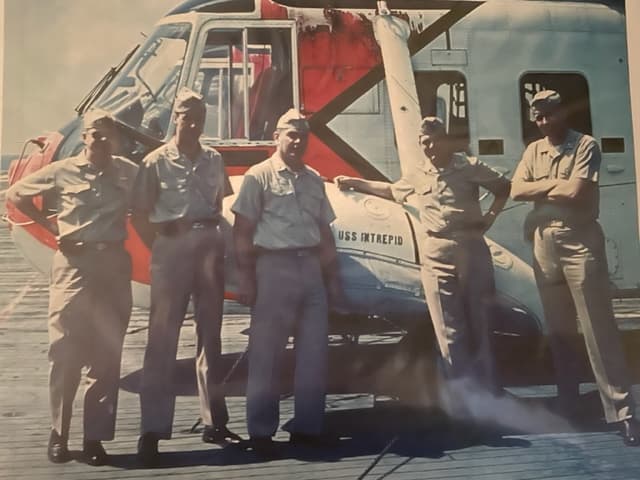
In early 1965, the National Aeronautics and Space Administration (NASA) mission planners assigned two Coast Guard backup recovery forces for the GEMINI 3 mission recovery. GEMINI 3 was the first crewed mission in NASA’s Project Gemini and was the first time two American astronauts, Virgil I. “Gus” Grissom (Command Pilot) and John W. Young (Pilot), flew together into space. The plan was to orbit the Earth three times before splashing down in the Atlantic Ocean. Recovery assets consisted of two RELIANCE-class cutters, DILIGENCE and VIGILANT, each with an embarked HH-52A and a backup HH-52A aboard the Navy’s aircraft carrier USS INTREPID the primary recovery vessel. LCDR Redfield was designated the Officer in Charge of Coast Guard forces and was stationed aboard INTREPID.
“On 23 March 1965, the GEMINI 3 capsule, nicknamed Molly Brown, splashed down in the Atlantic Ocean approximately four hours after launch and USCGC DILIGENCE was first on-scene and launched its helicopter to assess the capsule’s and crew’s safety. Coast Guard helicopters were the first to hover over the capsule after splashdown. The leading Navy’s SH-3A, en route, was designated “on scene commander” by INTREPID. At the moment LCDR Frederick P. Schubert was closing on the swimmer for the hoist, the Navy helicopter pilot, LCDR Warren H. Winchester, not yet on scene, ordered USCGC DILIGENCE and helicopter to “vacate the area.” In effect, according to Redfield, “the show was now over for the Coast Guard forces.” In the rush to save the astronauts, the Navy helicopter crews ignored the second medic in the water (a pararescueman dropped from an Air Force C-54), the one Schubert was about to recover, and it was another 15 minutes, by Redfield’s account “before they counted noses and came up missing one man.” Until the second medic was recovered by a Navy helicopter, Schubert lingered nearby, staying out of the “area” but keeping a watchful eye on this man in the event he appeared to be in trouble.” (Summary of Excerpts from “Who Saw this Coming: U.S. Coast Guard Support for the GEMINI 3 Mission” by Tom Beard)
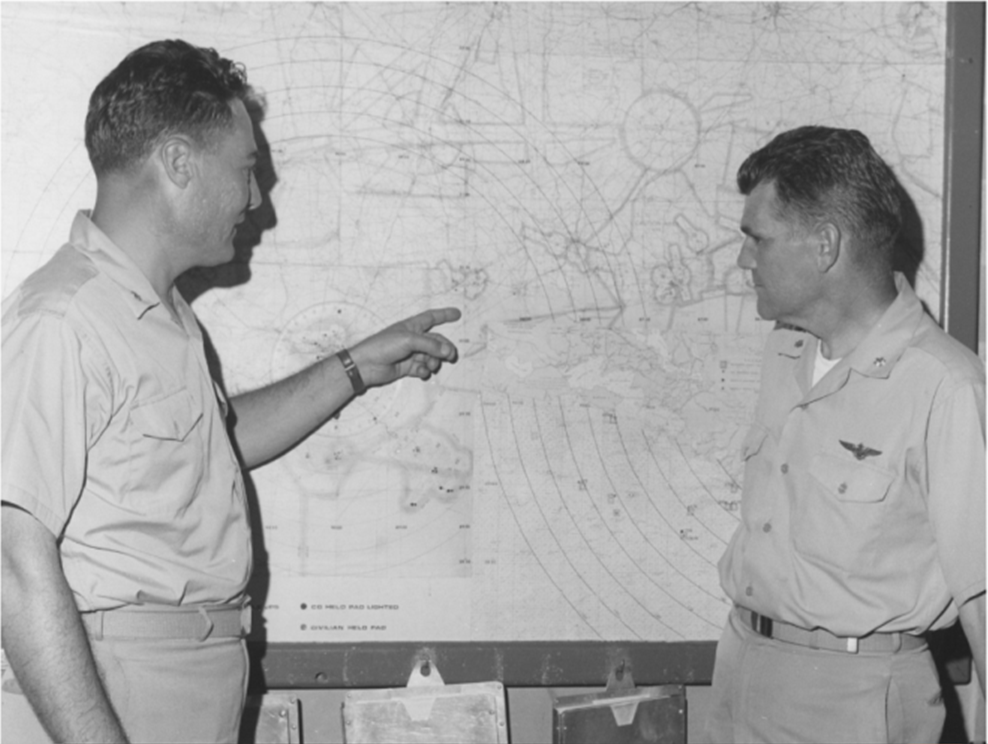
Later that fall on 09 September 1965, Hurricane BETSY made landfall in New Orleans while LCDR Redfield was the acting-Commanding Officer of Air Station New Orleans (June-October 1966). During the period 09 -17 September, ten Coast Guard, four Navy and three Army helicopters accomplished the largest rescue and evacuation operation ever conducted. Over 1,100 persons were rescued from the flooded area and flown to safety. Emergency, medical supplies, food, doctors and nurses were delivered to isolated areas. Despite adverse weather conditions, pilots and crews displayed outstanding courage, ability and precision while hovering near poles, wires, antennas and other obstructions to rescue people from roof tops. Although the hangar, office and shop spaces at the Air Station remained flooded, damaged, and unusable due to lack of electricity, the ground crew and maintenance personnel performed in an outstanding manner to keep the aircraft operating throughout the period. Pilot and crews assigned from other Coast Guard Commands joined the Air Station personnel to form a group whose achievements resulted in an outstanding lifesaving and humanitarian effort. For his leadership and performance throughout the natural disaster, LCDR Redfield earned a Coast Guard Commendation Medal:
“For meritorious performance of duty on 10 and 11 September 1965 while serving as Commanding Officer, Coast Guard Air Station, New Orleans, Louisiana, during and following Hurricane “Betsy” which devastated the New Orleans area. During this period, Lieutenant Commander REDFIELD skillfully directed the most extensive air rescue operation ever performed by Coast Guard units. Despite a damaged hangar and meager operating facilities, he expertly coordinated the maintenance of Coast Guard helicopters and supervised the operational control of ten Coast Guard, four Navy and three Army helicopters which operated under hazardous weather conditions, poor visibility and limited communications. Nearly 2,000 persons were lifted to safety by helicopters while logistic and medical flights were flown to all sections of the devastated region. Lieutenant Commander REDFIELD’s perseverance, ingenuity and organizational ability contributed significantly to the successful completion of the massive rescue operations. His sound judgment, and unwavering devotion to duty were in keeping, with the highest traditions of the United States Coast Guard.”
Redfield pinned on silver oak leaves on 01 July 1966 and with his promotion to Commander received new orders.
Redfield’s final assignment prior to retirement was the first Officer-in-Charge/Operations Officer for the Basic Operational Training Unit (BOTU) – predecessor to present day “Training Department (TRADEP) at Aviation Training Center (ATC) Mobile, AL. While the initial BOTU was established at Savannah in 1964, this function transferred to ATC Mobile when it opened in 1966. Redfield’s contributions between October 1966 and August 1967 included expansion of standardization coverage for both the HH-52A and HU-16E; formalization of periodic standardization team visits to all air stations to ensure all pilots were flying by the book (referred to as ‘BOTU Standardization Program for Air Stations’ in the direction memo); and taking over responsibility for edits, changes and improvements to aircraft operator handbooks and flight manuals from Coast Guard Headquartersxxxi. Redfield designed the initial course of instruction for HH-52A “Standardization Visit” to include a two week review of the aircraft handbook and standardization manual, lectures on systems, emergency procedures, pre-flights and aircraft wipeout procedures. He further recommended that the course of instruction would consist of flying with “each duty standing pilot” to include a “1.5 hour day land flight; 1.5 hour day water flight and one 2.0 hour night land and water flight”xxxii.
CDR John Redfield retired from the Coast Guard on 31 August 1967, in a ceremony at ATC Mobile, AL. For many years, he worked as a helicopter pilot for Petroleum Helicopters. He passed away on 05 May 2004, at his home in Point Coupee, LA.
CDR John C. Redfield was a crucial figure in formalizing modern Coast Guard ship-helicopter operations. While niche icebreaker capability existed, Redfield’s work in 1964, while assigned to the RELIANCE-class cutter evaluation, professionalized shipboard helicopter tactics, techniques and standards that transformed ship-helicopter operations from a limited application to an indispensable Service capability. These tests yielded positive results, determining the ship-helicopter capability suitable for challenging sea conditions. Redfield addressed specific cutter requirements, recommending modifications like deck coatings and markings, aircraft configuration, lighting, improved tie-down systems, initial operating limits and training requirements. He also advocated for an amendment to the Air Operations Manual, which later evolved into the Shipboard Helicopter Operational Procedures Manual. His innovations addressed practical challenges and ensured enterprise standardization. Redfield’s work fundamentally changed the Coast Guard. All subsequent major cutters were designed with helicopter facilities, expanding mission capabilities. This integration became vital for drug interdiction, mass migration and fisheries law enforcement operations. Previously, Redfield demonstrated capabilities in Project TUGBIRD, which equipped helicopters for towing disabled vessels. While no longer used today, this capability was utilized for several high visibility cases where aircrews were decorated and multiple lives were saved. Notably, as acting Commanding Officer of Air Station New Orleans, Redfield’s leadership was critical during Hurricane BETSY in September 1965. He skillfully directed the most extensive air rescue operation ever performed by Coast Guard units, coordinating numerous helicopters under extremely hazardous conditions, ultimately lifting nearly 2,000 people to safety. Redfield, the first Officer-in-Charge of the BOTU at Aviation Training Center Mobile, formalized a standardization program for all air stations. He expanded training coverage for the HH-52A and HU-16E and also created a new unit standardization visit framework that is still used today. His achievements also included multiple heroic rescues and WWII missions with VP-6 CG out of Bluie West 1, Narsarssuak, Greenland that earned high level recognition – including the Distinguished Flying Cross and Air Medal – solidifying his operational prowess and his legacy of exceptional service and innovation.
[i] Memorandum from Commandant (O) to LCDR John Redfield dtd 18 February 1965 – Subj: Appreciation of Services.
[ii] Memorandum from Commandant (OAU) to Commander, Eighth Coast Guard District dtd 12 March 1964 – Subj: Standing Operating Procedures for Helicopter Operations Aboard: the CCC RELIANCE; comments concerning
[iii] Memorandum from LCDR John Redfield to Commandant (OAU) (with multiple vias) dtd 27 October 1964 – Subj: Helicopter Operations on board CGC RELIANCE; final report of. NOTE: Cutters STORIS (230 feet), NORTHWIND and EASTWIND (both 269 feet) were all icebreakers. COBB (300 feet) was an ageing passenger vessel converted during WWII to helicopter carrier configuration and was used for early ship-helicopter operational trials.
[iv] Beard, Barrett Thomas. Wonderful Flying Machines: A History of U.S. Coast Guard Helicopters. Naval Institute Press, 1996, pp 133.
[v] Memorandum from LCDR John Redfield to Commandant (OAU) via Commander, Eighth Coast Guard District dtd 29 July 1964 – Subj: Helicopter Operations on board CGC RELIANCE; information concerning.
[vi] Ibid
[vii] Ibid
[viii] NOTE: In 1965, following the devastation of Hurricane Betsy, Redfield landed his helicopter near the historic Mary Plantation to offer evacuation assistance to the owners, Marg and Eric Knobloch. Redfield returned with a chainsaw to clear the storm-damaged grounds, facilitating the Knoblochs’ safe exit. He would later form a profound relationship with the couple – this initial act of kindness blossomed into a deep, familial bond. Redfield and his wife became legally adopted as their children, and he dedicated himself to the care and upkeep of the 1800s plantation and its owners until their passing.
[ix] Services, News Staff. “John Redfield’s Love of Flying Began Early in Life.” The Pointe Coupee Banner, 13 May 2004, pp. 16.
[x] Redfield service record entry (pp 662): Memorandum from MM2c John Redfield to Commandant (with multiple vias) dtd 02 May 1942 – Subj: Flight Training, application for.
[xi] Ibid
[xii] Redfield service record entry (pp 322): Record of assignments, circa September 1956.
[xiii] Redfield service record entry (pp 616-620): Civil Aeronautics Administration paperwork, Coast Guard Advanced Instrument Course.
[xiv] Redfield service record entry (pp 615): Memorandum to file dtd 22 June 1944 – Subj: Helicopter pilot, designation of.
[xv] Coast Guard Aviation Association (likely Bear Mosely). (n.d.). 1943: Coast Guard Patrol Squadron VP-6CG Established. Retrieved from https://cgaviationhistory.org/1943-coast-guard-patrol-squadron-vp-6cg-established/
[xvi] Ibid.
[xvii] Letter from Harry I. Trice (Sally), Glastonbury, CT 06033-2236 to “Mary” (possibly Redfield’s first wife – Mary Cloin) – no date.
[xviii] Redfield service record entry, pg 794 (under Meritorious Conduct heading)
[xix] Redfield service record entry, pg 429
[xx] Editor. “C-G Men here Going to Pacific.” Tampa Bay Times, 12 June 1952, pp. 19.
[xxi] Redfield service record entry, pg 1083-1084
[xxii] Beard, pp 133.
[xxiii] Sean M. Cross (comment from Art Wagner). “Anyone out there super-smart on the history of Project TUGBIRD at Air Station St. Petersburg in the late 1950s?” Facebook, 29 Mar 2023,
[xxiv] NOTE: Tom Beard stated that interviews John Redfield stated that the suspected cause was carburetor icing from water spray caused by the rotor wash at very low altitude.
[xxv] Memorandum from Commanding Officer, Air Detachment Kodiak to LCDR John Redfield 25 May 1962 – Subj: Appreciation for services.
[xxvi] Ibid.
[xxvii] Redfield service record entry, pg 1160-1163
[xxviii] Letter (Trice)
[xxix] Memorandum from Commanding Officer, NORTHWIND to Commandant (PO-4) dtd 13 September 1962 – Subj: LCDR John C. Redfield, USCGR; letter fitness report concerning.
[xxx] Memorandum from Commanding Officer, Air Station New Orleans to LCDR John C. Redfield dtd 22 December 1964 – Subj: Letter of Appreciation (Service Record pp 1158-1159).
[xxxi] Memorandum from Commandant (OSR-2) to Commanding Officer, Mobile Air Station dtd 26 April 1967 – Subj: Flight Handbook and Aircraft Standardization Manuals; BOTU responsibilities for (Blaich NMNA archive visit).
[xxxii] Memorandum from Commanding Officer, Coast Guard Air Station Mobile, Alabama to Commandant (OSR-2) to dtd 12 May 1967 – Subj: BOTU Standardization Program for Air Stations and Redfield personal notes on topic (Blaich NMNA archive visit).
_____
Retired CAPT Sean M. Cross served 25 years in the Coast Guard as a helicopter pilot and aeronautical engineer. Flying both the MH-60T and MH-65D, he accumulated over 4,000 flight hours while assigned to Air Stations Clearwater, FL; Cape Cod, MA; San Diego, CA; Elizabeth City, NC and Traverse City, MI – which he commanded.
LCDR Daniel J. Blaich is an active duty Coast Guard helicopter pilot and flight examiner assigned to the MH-65 Standardization Team in Mobile, AL. He has accumulated over 3,400 flying hours while assigned to Air Stations Miami, FL; Atlantic City, NJ; and Savannah, GA.